The Pick and Shovel Poet - Pascal D'Angelo
A Collection Built Around the Life of Pascal D'Angelo
Contents: Description | Links | Acknowledgments
Description
The early 20th century witnessed one of the largest waves of immigration to the United States of America. Between the late 19th and the early 20th century, over four million Italians arrived in America, abandoning conditions of economic instability, political repression, and regional disparity in Southern Italy with the hope of a new start. However, Italians faced hardship, labour, and assimilation when they arrived in industrialized America. The story of these immigrants reveals the Italian immigrants’ cultural resilience as agents in social movements and the arts. Depicting the story of the stereotypical poor Italian immigrant who struggled to live as a labourer, Italian immigrants became leaders in American culture and construction. However, within this larger story, the individual voices of these immigrants—especially those of working-class labourers—often remained unheard.
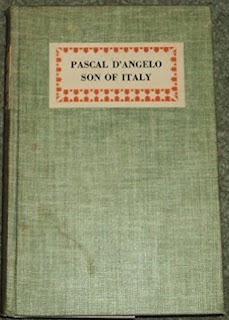
Yet, in this larger frame, the voice of Italian immigrants has often remained suppressed. Specifically, early 20th-century Italian-American writing, including poetry, was being published throughout the country. The life and works of Pascal D’Angelo (1894-1932) provide a significant story of a working-class immigrant becoming a published poet with recognition in the most elite American literary circles. His poetry and autobiography, Son of Italy (1924), illustrate the story of Italian immigrants who were silent for so long.
Pascal D’Angelo’s work fills a gap between immigrant labour history and literary expression. Compared with most of his literary contemporaries, like Arturo Giovannitti and Emanuel Carnevali, who used ethnic newspapers and local community publications, D’Angelo sought and received literary recognition in mainstream venues like The Nation while eliciting critical acclaim from critics. His poetry allows one to experience the dual nature of the immigrant experience. He illustrates the personal and historically relevant regarding idealization of the homeland amid the brutal realities of the immigrants’ new home.
This website exists to illuminate D’Angelo’s legacy and the broader significance of Italian-American labour poetry. As a distant relative of his and the son of an Italian labour immigrant, I have long been fascinated by their lives and the stories of Southern Italian immigrants, whose resilience and cultural contributions are too often overlooked. Through historical research and literary analysis, this project seeks to contextualize D’Angelo’s work within the struggles of early 20th-century Italian immigrants and the larger history of labour activism. His writings challenge conventional narratives of immigrant assimilation, instead revealing the tension between cultural nostalgia and the harsh realities of American industrial labour. In doing so, they remind us that the immigrant experience was not simply one of hardship but also agency, creativity, and resistance. Through this project, I aim to revive his voice and ensure that the struggles, aspirations, and literary achievements of Italian labourers like him are not forgotten.
What’s Been Done
With archival research and online resources, this project aims to place D’Angelo’s writings within the wider historical narrative of Italian-American literature, immigration, and labour of the early 20th century. Future plans are to expand this research through stronger engagement with New York and Introdacqua literary and historical groups, going deeper into the collective story that D’Angelo illustrates.
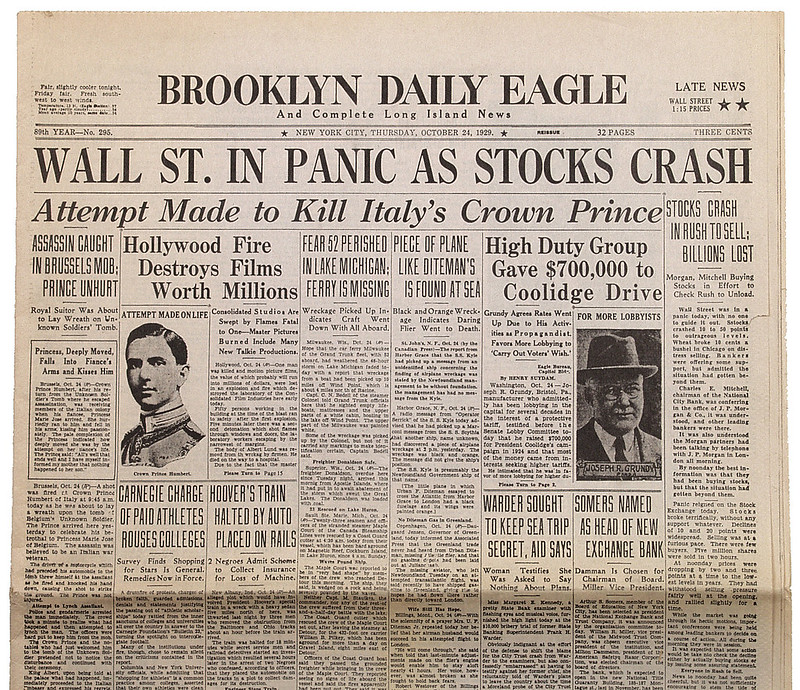
Research has mainly involved reading D’Angelo’s writings against the backdrop of the Italian-American working-class experience, analyzing how this poetry was used as a tool of resistance and cultural expression. I have learned from D’Angelo’s works about the recurring themes of resilience, displacement, and artistic yearning. Using municipal documents, union trends, and newspapers, like The Brooklyn Eagle, to put his poetry into context. All these documents point to a main defining characteristic of the time, the struggle immigrants faced both in work that was brutal and in a society that wanted assimilation.
The archival study has been important in rediscovering his work’s reception, especially through literary reviews and correspondence between him and prominent figures like Carl Van Doren. Moreover, Italian-language-based publications served to give a stronger cultural hold to immigrants, especially through Italian Newspapers found spread throughout America.
Future Research
In order to expand this work done here, there is a plan and hopes to research further and work together with others. With hopes to work with historical societies, literary organizations, and archive centers based in New York and Introdacqua. Researchers and community organizations dedicated to Italian-American literature can help increase accessibility to unpublished text, documents, letters, and even oral histories missing from this exhibit. All allowing for a deeper understanding of D’Angelo’s life, his works, and his cultural contexts.
Some broader future research may include a more in-depth study on Italian-language and labour newspapers like “L’Adunata dei Refrattari”, which may shed light on how much revolutionary labour movements influenced D’Angelo and his associates. Also, focusing more on the period later in his life (and during his eventual death), the Great Depression and how even more significant economic and labour struggles impacted the lives and works of these immigrant-labour poets.
Overall, by connecting literary criticism to historical inquiry, this project will reveal the role of poetry as a force of cultural and labour resistance within immigrant communities. With hopes to further revive interest in the voices of Italian-American workers whose creative labours have been silenced for so long by prevailing narratives.
Links
The following are some of the links and resources that made this website possible:
- CollectionBuilder-GH
- The Dreamlife of Pascal D’Angelo
- Osservatorio Diaspora Italiana e Italofona
- Original Copy of Son of Italy
- Pascal D’Angelo gruppo Introdacqua
Acknowledgments
The creator would like to acknowledge assistance and support from:
- The York University Libraries’ Making & Media Creation Lab
- The D’Angelo/Persutti Family
- Pascal D’Angelo Groups (Introdacqua)
- Professor David Koffman
Contact Information
Luca D’Angelo
York University: Deparment of History and Education
Email: lucad5@my.yorku.ca
Phone Number: 437-996-8963